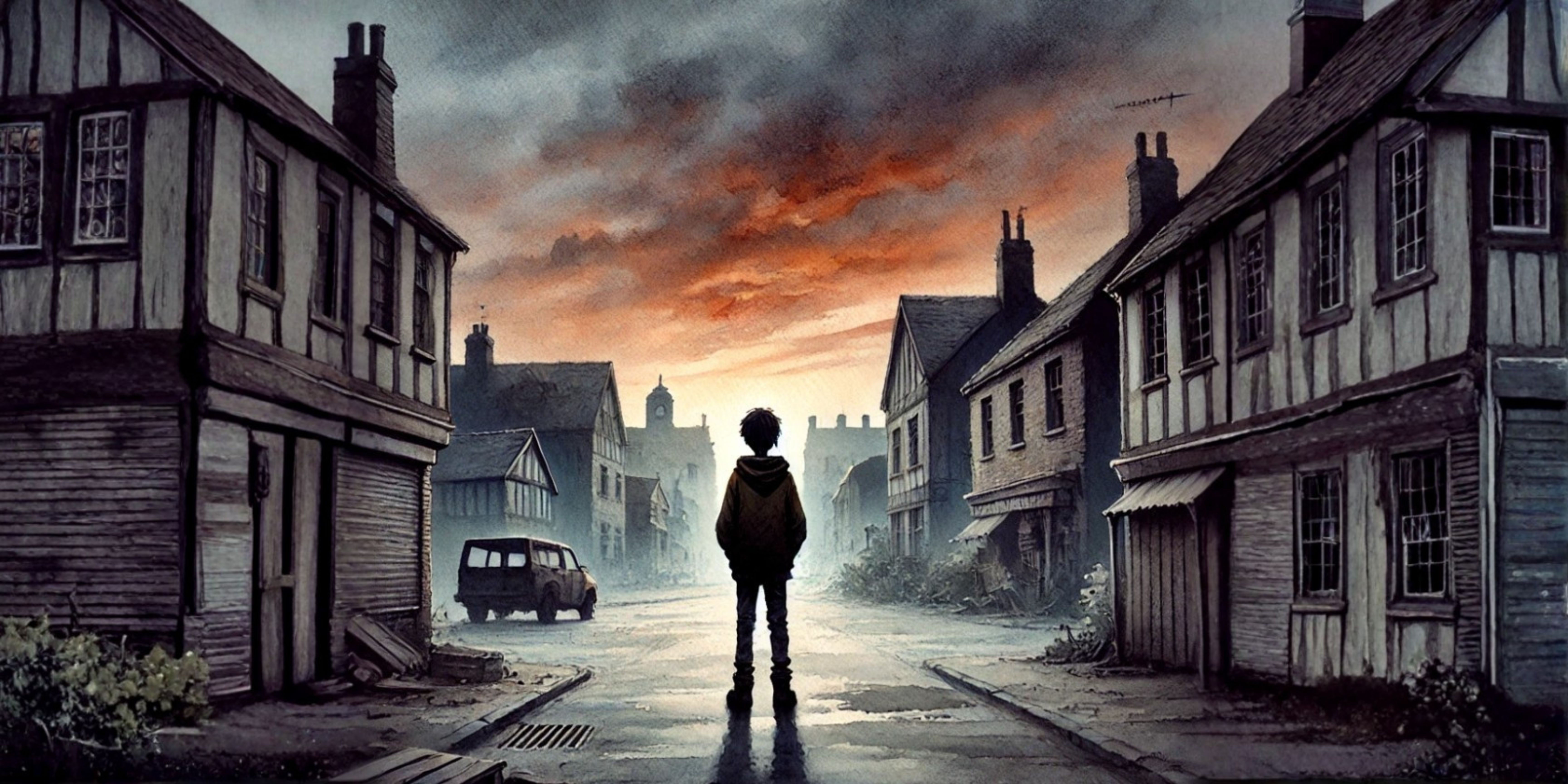
The Lie
I was on holiday with my parents and my younger brother, Sam, in a small, remote village in Romania. Its name was beautiful to hear but impossible to pronounce.
The place had an old-world charm about it — cobbled streets, faded shop fronts, and a sense that time had quietly forgotten it.
Evenings were slow there. The air felt heavier somehow, as if the village carried more stories than it was willing to share.
One night, as we wandered through a local market, I noticed an elderly woman sitting alone beside a stall. Her eyes were clouded with age, yet there was something unsettlingly alert about her — a presence that made her stand out from the noise and movement around her.
“Excuse me, young man,” she called, her voice cutting cleanly through the chatter.
I turned.“Could you help me carry this basket?”
I hesitated. I wanted to get back to my family. If I’m honest, I couldn’t be bothered. So I lied.
“Sorry,” I said. “I can’t help. I’ve twisted my wrist. It hurts too much.”
The woman turned her sightless eyes towards me. A faint, knowing smile touched her lips.
“A twisted wrist?” she said calmly.
“Very well. But remember this — lies have a way of becoming truth.”
I laughed it off and hurried back to my family. By the time we returned to the hotel, a tight ache had settled in my wrist.
Within an hour it was swollen, throbbing — exactly as I had described.
When we returned to the UK, life slipped back into its familiar rhythm. School. Friends. Normality.
I pushed the strange encounter to the back of my mind. But something was wrong. Every lie I told began to take shape in the real world.
I told my mates I couldn’t play football one afternoon because I had a headache. Moments later, a sharp, piercing pain struck my temple, forcing me to sit down, dizzy and nauseous.
Another time, I lied to my teacher, claiming my dog had eaten my homework. The next morning, I found him unwell, scraps of paper scattered beside his bowl.
At first, the lies were small. Then they grew. I told my friends I owned a rare, expensive video game. The next day, it appeared in my bedroom — but other things I owned were gone, sold off without explanation.
Then I said something I can never take back. I told someone that Sam was adopted. That night, the family photos changed. Faces rearranged themselves. Sam stood beside strangers where my parents should have been.
Terrified and consumed by guilt, I told Sam everything.
“I need to find that woman,” I said. “I need to make this stop.”
The following summer, we returned to the village. The market looked unchanged, as if the year between visits had never even happened. And there she was — sitting in the same place, exactly as before.
“You’ve returned,” she said, without looking up.
“I warned you about the power of lies.”
“Please,” I begged, falling to my knees.
“Make it stop. I don’t want this anymore.”
She sighed, the sound heavy with centuries of weariness.
“There is only one way to break the curse,” she said.
“You must tell one final, honest lie.”
I frowned. “How can a lie be honest?”
“You must lie about something you truly believe to be true.”
I thought for a long time. And then I knew. With trembling lips, I whispered, “I want to be alone forever.”
The woman nodded sadly.
“Then so it shall be.”
A cold wind tore through me. When I opened my eyes, I was standing outside my school gates back home. Everything looked the same — yet deep down, I knew something had shifted.
I ran home, desperate to prove myself wrong. The house was empty. Cold. Silent. Abandoned.
It was as if no one had lived there for years. Dust coated the furniture. Wallpaper peeled from the walls. The air smelled of decay.
I searched every room, calling for my parents. For Sam. Nothing. No reply. The town was the same. But no one was there.
Shops stood boarded up. Cars lay abandoned. Windows shattered.
It was as if the world had quietly moved on without me.
Days blurred into weeks. Weeks into months. The silence became unbearable. I tried to remember my family — their voices, their laughter — but the memories faded, slipping through my fingers like smoke.
That was when I realised the truth. The woman hadn’t twisted my final lie into something cruel. She had made it real.
My wish to be alone forever had become my reality. I was the last remnant of a world that no longer remembered me.
A ghost in my own story.
A warning whispered on the wind of a forgotten town. Because in the twisted dance between lies and truth, the cost of deceit is far greater than we ever imagine it could be.
THE END
A Quiet Note
We like to believe our words disappear once spoken — that a small lie drifts away and dissolves harmlessly into the air.
But what if it doesn’t?
What if every untruth leaves a mark, reshaping something quietly behind the scenes — a memory, a relationship, a moment we thought was safe?
In The Lie, deception is not punished by guilt alone.
It changes the fabric of reality itself.
Not out of cruelty — but consequence.
Because sometimes the most dangerous lies aren’t the ones meant to hurt others.
They’re the ones we tell to protect ourselves.